Bob Marley
The greatest test of true artistry could be considered time, and despite his passing over 30 years ago, Bob Marley’s music has left an unparalleled legacy that continues to live on through modern culture and society. He is known as one of the greatest musical influencers of his time not just for popularising the reggae genre internationally, but leading the music industry into an era of change that aimed to shift culture and stir up the hearts of his listeners towards peace and love.
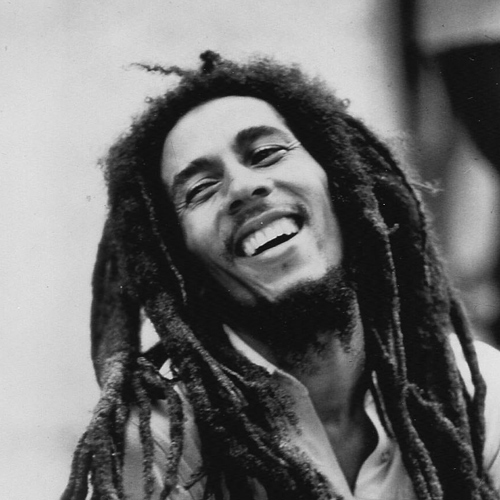
Marley and his band ‘the wailers’ combined numerous genres such as early ska, rock steady, and reggae, which culminated in the 1970s into an electric rock-influenced hybrid that sent him and the wailers into international fame. The local music scene prior to his influence was blooming with talent, but lacking in depth, with lyrics focused mostly on sensual love and carnal pleasures. Marley shifted this president with his politically and spiritually loaded lyrics that inspired its listeners, the heart of the genre (and Jamaican culture) began to shift. He was a game changer for the genre, the nation, and the millennia through his poetic expression of profound universal truths that stemmed from his deep spirituality and Rastafarian beliefs. Although he had such mainstream success, his lyrics openly promoted his religious and spiritual beliefs, making him one of the first non-christian religious influencers to gain such international success – particularly in western culture.
Contextual Landscape
The environmental factors that Marley grew up with, inarguably had a massive influence on his music. He found peace in his music and spirituality, but it wasn’t until he joined the two in a cocktail of ‘reggae’ that he began to take stride. His music fit the distinctive characteristics of the local ‘reggae’ music scene, but the depths of the themes and messages within his lyrics were what set him apart. He sung on behalf of his people, his nation and his religion, breaking out of the shallow nature of the eras music and inspiring change where it was soo needed.
Political Influences & Response
The political environment that fueled such violence and inequality in Jamaica was led by 2 main figures, Prime Minister Michael Manley and opposition leader Edward Seaga. The two politicians were widely known to have hired and armed local gangs to enforce their opposing political agendas and maintain power through fear and violence.
Although Marley openly (and understandably) opposed the political system, his popularity along with politically loaded lyrics led him to be considered as a powerful political figure in the nation. This popularity fueled one of the most historical, political musical events ever recorded called the “One Love Peace Concert”, whose agenda was as simple as its name, to restore oneness, peace and love in a broken nation. In the middle of his set, after narrowly escaping an assassination attempt the night before, Marley invited both political leaders to the stage, joining hands with them both in a symbol of unity – proclaiming peace and love over the nation.
Social Influences & Response

Robert Nesta Marley was born to a black mother (Cedella Booker) and a white father (Capitain Norvel Sinclair Marley) who left when he was only 5 years of age (Marley Official, 2019). “The fact his father had a half black child upset the Marley family, who were highly placed in Jamaican society, but his father made sure he was cared for.” – Collaborator Junior Marvin (Sawer, 2018). Although His father cared for him, his passing left Marley and his family without financial support, and the family was forced to move to Kingston, where they lived in one of the nations poorest slum neighbourhoods called Trench-town. Trench-town was the epicentre of the politically fueled gang wars that divided Jamaica, and saw endless bloodshed in the streets.
Growing up, he was discriminated against for his colour of skin and nicknamed ‘white boy’ by many of his peers. His wife Rita is quoted saying “They would call Bob an outcast, ’cause you really don’t belong to either side: you’re in between, you’re black and white – so then, you’re not even black.” (Smee, 2018)) Facing such rejection and lack of belonging, it would have been understandable for him to respond by simply entering into the rage and violence that surrounded him, but instead, Marley found peace and belonging in his music and spirituality. He is famously quoted in 1975 as saying, “I don’t have prejudice against myself. I’m not on the white man’s side, or the black man’s side. I’m on God’s side – the one who create me and cause me to come from black and white.” (Smee, 2018)
He spoke on the behalf the mistreated and became a mouthpiece for the marginalised – not just at home, but internationally – where there was injustice, his music became a beacon of light to the broken and persecuted.
Cultural Influences & Response
Growing up in a cultural cocktail of violence, discrimination and poverty spurred Marley on his search for greater truths and realities that could shine light into the darkness that surrounded him. Through his lyrics, he freely shared simple truths that resonated with and aimed to heal the culture he was surrounded by, rebelling against any injustice and standing always for love. He covered a broad range of topics such as spirituality, religion, freedom, love etc. which spoke profoundly not just to Jamaicans but the global cultural landscape of the era.
Economic Influences & Response
Losing the financial support from Marleys father was a detrimental blow to the family’s financial position, and forced them to move from the rural village of ‘Nine Mile’ into the slums of Trenchtown. As discussed above, this neighbourhood was rife with poverty, and Marleys family was no exception to this economic environment.
As he grew up in extreme poverty and violence, he represented freedom from the chains of poverty and sung a great deal about the economic floors in society that helped the rich get richer and the poor get poorer.
Audience
Although Marley’s music spoke greatly the poor and mistreated, it also fit perfectly into the changing landscape of western culture as the transition form the 60’s into the 70’s saw a great push for human rights, freedom, love and peace – all of which were morals Marley stood for and sung about. His music catered for the “baby boomers” – children born in the decade after the World War II who now had time, resources and money to spend ‘socially’. With this new found time and funding for lifestyle, the baby-boomers began to explore things such as music, culture, art, etc which naturally snowballed into social exploration and activism towards issues such as freedom, peace, love, war, etc. Amongst this surge of activism, rose the Vietnam war and its conscription of American soldiers into a war that divided the nation. The themes and messages of Marleys music spoke into the social climate of the American people and resonated with soo many that it turned Marley into an activist icon, sending him from a Jamaican artist into international fame.
His music crossed over all borders of age, gender, culture etc; but it specifically resonated with those who were either facing oppression or those who were protesting it. In the face of racism, he sung of equality. in the face of war, he sung of peace. In the face of poverty, he exposed greed; and in all of this, he inspired others to do the same.
Hard and Sot Skills
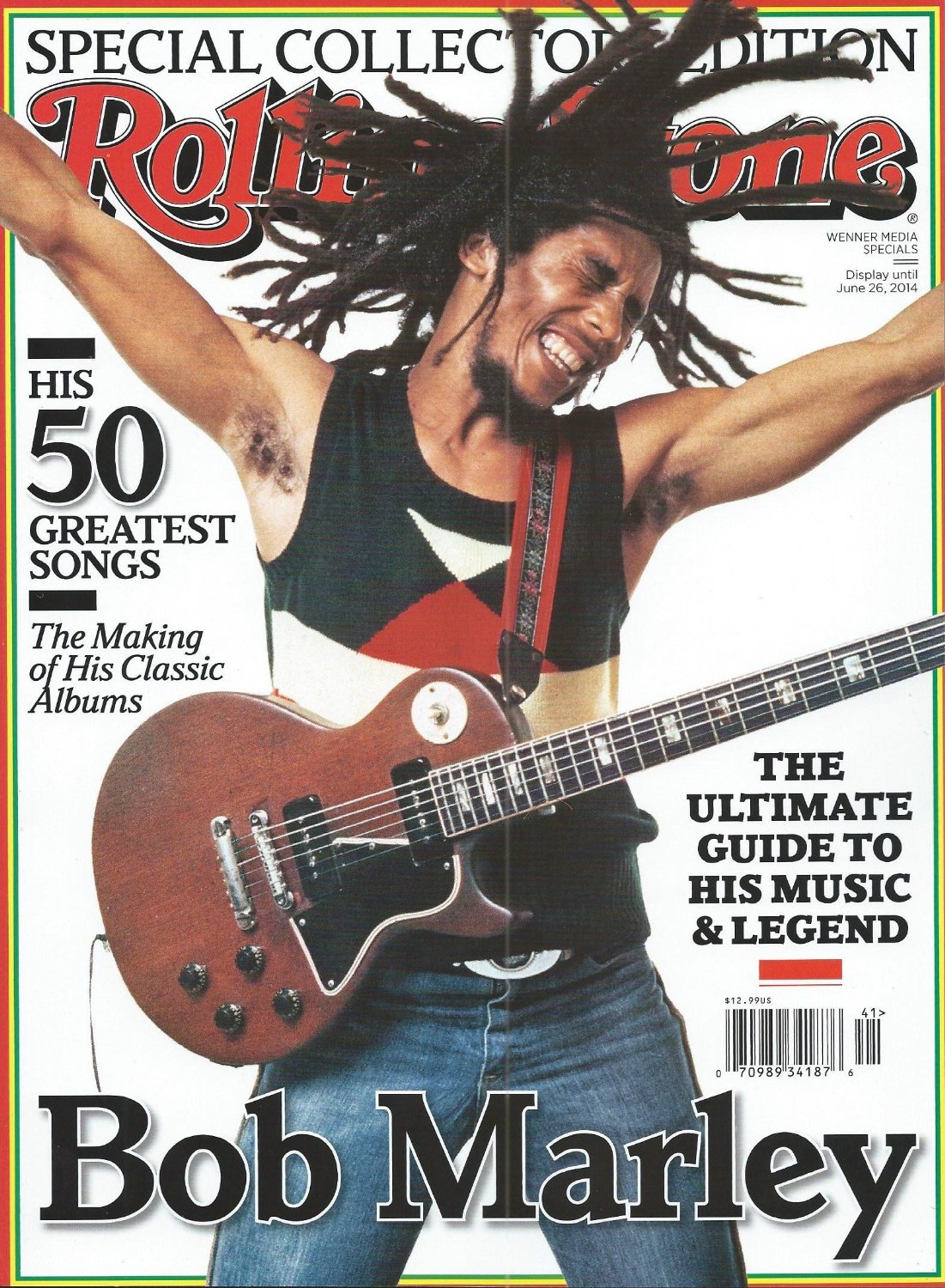
As a young musician raised in a culture that celebrated music, Marley needed some serious hard skills to compete. The obvious hard skills that he demonstrated were his vocal and instrumentation – specifically on the guitar. The man was truly a musician, and his dedication to the music led to experimental, signature sounds that broke new ground for not just the Jamaican but the international music scene..
Although Marley was fluent in many of the hard skills required to make it in the music industry, it was arguably his soft skills that set him apart from his competitors. Any man can learn to sing and make music, but it was ‘who’ Bob was and what he stood for that spurred on his fame as a symbol of oneness and peace. As soft skills are generally developed over through relationships with others, Marley’s Rastafarian beliefs and lifestyle provided the perfect environment to develop strong soft skills. He openly participated in communal living that kept him surrounded by fellow minded friends and family – establishing an abundance of social skills. He simply considered himself as ‘one of the wailers’, showing humility, teamwork and a lack of ego despite his fame. He was not known as a particularly outgoing person in general, but once he got his feet on stage and a his hands on a microphone, he carried such a stage presence that he could entertain a whole crowd with seeming ease.
References
Meschino, Patricia. (2015). “The Music And Marketing Genius Of Bob Marley, 34 Years After His Passing”. Billboard. https://www.billboard.com/articles/business/6561234/music-and-marketing-genius-of-bob-marley-34-years-after-his-passing.
Smee, Taryn. (2018). “Bob Marley Was Called ‘White Boy’ As A Kid”. The Vintage News. https://www.thevintagenews.com/2018/09/13/bob-marley/.
The Marley Family. (2019). Bob Marley (Marley Official). http://www.bobmarley.com/history/
Biography.com. (2019). Bob Marley Biography. A & E Television Networks. https://www.biography.com/musician/bob-marley
Denslow, Robin. (2011). “Bob Marley Presides over the Peace Concert” World Music, A History of Folk and World Music. The Guardian.
Thomas, Timothy, and Anthony White. (2019). “Bob Marley | Jamaican Musician”. Encyclopedia Britannica. https://www.britannica.com/biography/Bob-Marley.
Sawer, Patrick. (2019). People still suffering and Bob Marley’s message as relevant as ever, says friend and collaborator Junior. The Telegraph. https://www.telegraph.co.uk/music/interviews/junior-marvin-bob-marley-would-have-had-doubts-black-lives-matter/
Images
Rossell, R. (2011). Fact: Bob Marley’s Dad Was White. Retrieved from http://www.feelnumb.com/2011/08/08/fact-bob-marleys-dad-was-white/http://www.feelnumb.com/2011/08/08/fact-bob-marleys-dad-was-white/
Rolling Stone Magazine. August 12th, 1976. https://reggaemani.wordpress.com/2015/01/04/bob-marleys-50-greatest-songs-according-to-rolling-stone-magazine/
Reggaeville.com. 2019. Bob Marley. https://www.reggaeville.com/artist-details/bob-marley/details/
 CIM115 Bob Marley